


Know what you are buying
How to read a bottle of olive oil.
You should not have to take our word for anything. You should know what to read. This is the same checklist we used before we brought this oil in — run it on our bottle too.
The checklist
Five things to check on any bottle.
1A named town and a named producer
Ours
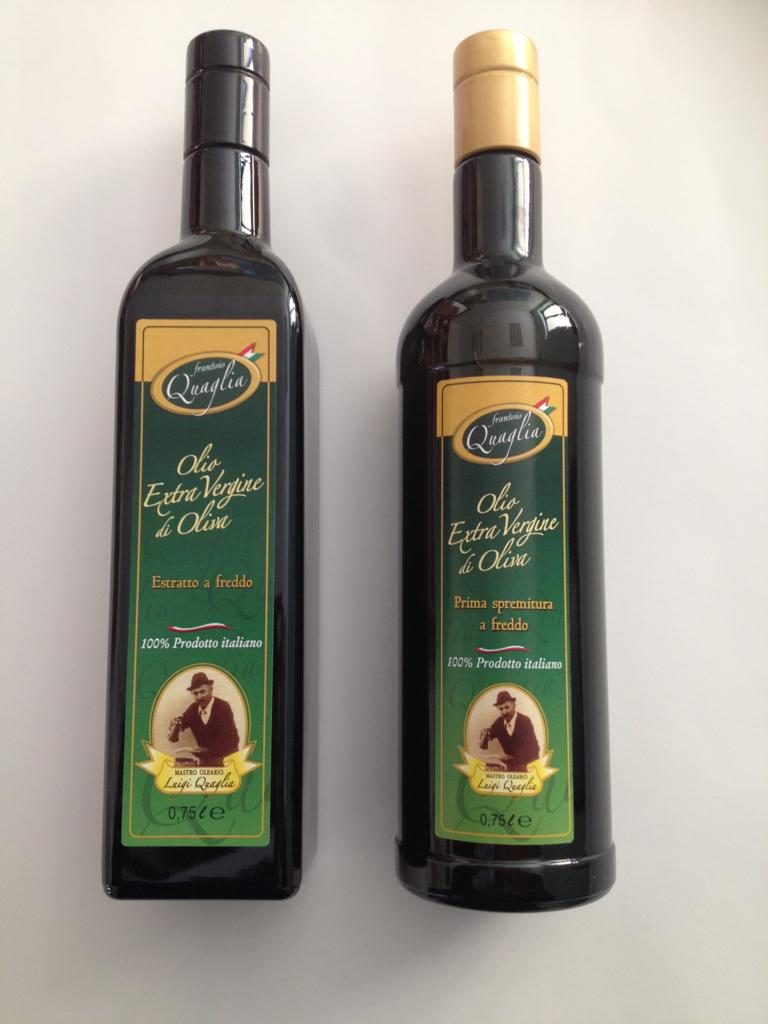
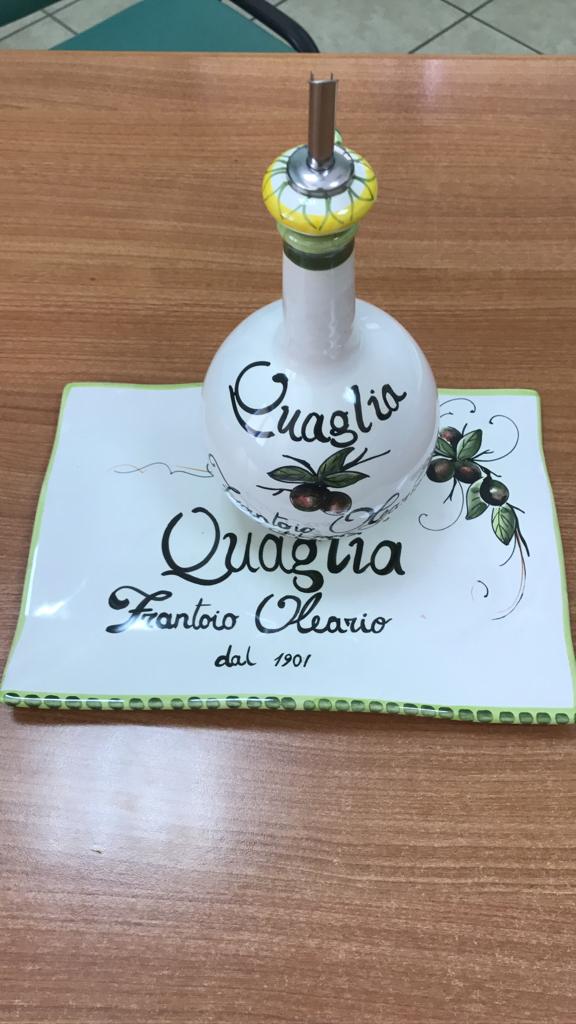
Frantoio Oleario Quaglia, Roccadaspide, province of Salerno, Campania. Milling since 1901.
What you often see instead
A brand name, an Italian-looking label, and on the back in small type: a blend of olive oils from more than one country. Not a scandal — simply a different product. It does mean nobody can tell you where the olives grew.
2Bottled where it was made
Ours
Filled and sealed in Italy, at origin, before it travels.
What you often see instead
Oil shipped in bulk and bottled at the destination. Every extra step between the press and the bottle is a step at which the contents can change.
3Cold extraction, not heat
Ours
Hand-harvested from the second half of October, cold extracted, traditional stone milling.
What you often see instead
Warmth during extraction, or full chemical refining. Heat lifts the yield and costs you the polyphenols, the vitamin E and the aroma. Under EU rules, cold extraction means the paste stayed below 27 °C — that is the number to look for.
4A harvest, not a year-round supply
Ours
One harvest a year. One allocation for the GTA.
What you often see instead
The same bottle on the same shelf fifty-two weeks a year, at the same price, with no harvest date printed anywhere on it.
5Somewhere you cannot just walk in and buy it
Ours
Quaglia has no Canadian supermarket distribution. It comes from the mill in Roccadaspide, or it does not come at all.
What you often see instead
Stacked by the pallet, next to eleven other bottles that all say the same four words on the front.
None of this is an accusation about any other brand. It is the list of questions you should be able to answer about any bottle you cook with every day — ours included.
What it should look and taste like
If it tastes of nothing, that is the answer.
In the glass
Green with golden reflections. Not pale, not flat yellow.
On the nose
A light, fresh fruitiness — the producer describes gentle notes of fruit rather than heavy grassiness.
At the back of the throat
A gentle bitter-and-peppery catch. That catch is the polyphenols, and polyphenols are exactly what heat and refining take out.

Now go read the back of the one in your kitchen.
If it names a town and a producer, good. If it does not, you know what to do about it.
Shop the harvest